
Hurricane Helene made landfall in Florida’s Gulf Coast as a Category 4 storm late last night, the most powerful storm to ever hit this region in history, and will move up the coast to North Carolina and Georgia. According to the The New York Times, this storm could create a storm surge up to 20 feet high–for reference: Hurricane Katrina, US’ deadliest storm on record, created a storm surge reaching 28 feet.
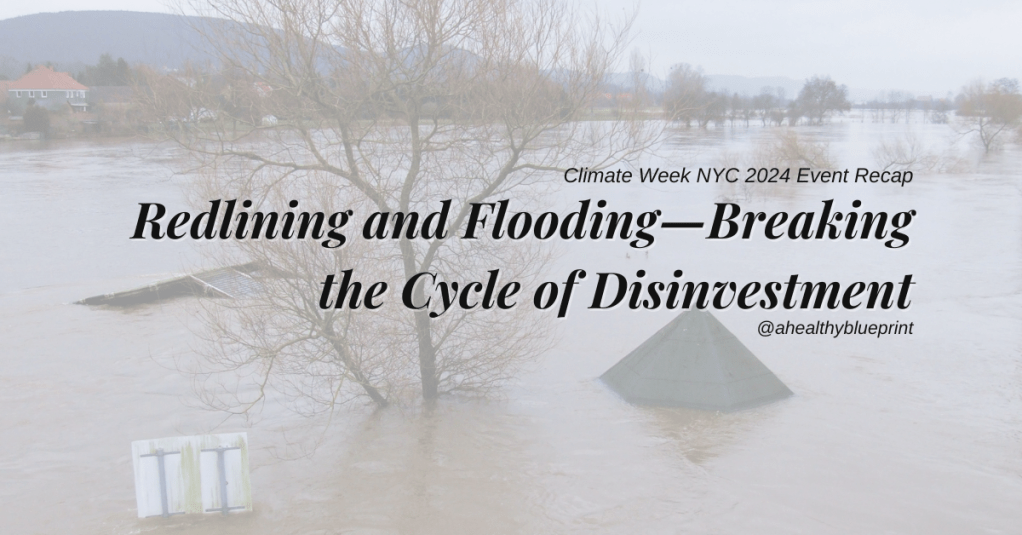
Unfortunately, we are seeing higher rates of these extreme weather events due to climate change, and low-income, Black, Brown, and communities of color impacted by legacy redlining policies will be impacted the worst:
1. Lower-income and communities of color often live on lower-lying lands like floodplains where runoff and floods will fall from higher lands
2. Cycle of disinvestment and inequitable funding e.g. not fixing old infrastructure or adding flood risk measures, prioritizing wealthier neighborhoods and boroughs
3. Lack of trees, ground vegetation, permeable surfaces to absorb rainfall
4. Unaffordable insurance and untenable costs to prepare for flooding
5. Green gentrification that can price existing residents out of their homes since property values go up
I was encouraged to hear some solutions already being implemented by the speakers with community buy-in, such as:
– stormwater projects using nature-based solutions in neighborhoods historically disinvested e.g. daylighting rivers
– green infrastructure e.g. artificial wetlands with co-benefits of green space, recreation, and biodiversity
– meaningful community participation from the beginning of a project e.g. Groundwork Hudson Valley’s Climate Taskforce
– rethinking how to redesign urban areas with flooding and urban heat in mind
Thank you gita nandan, thread collective , Candida Rodriguez, Groundwork Hudson Valley, Arianna Salazar-Miranda, Yale School of the Environment, and chauncy young, New Settlement Apartments for your insights, and Furhana Husani, WEDG Waterfront Alliance for moderating!
If you missed the webinar, Waterfront Alliance has a recording up now. They also hosted another webinar focused on challenges and opportunities for climate-resilient retrofits to housing as extreme weather events are on the rise. Check out that recording here.
 A Healthy Blueprint
Leave a comment