

Imagine yourself walking through a nature preserve surrounded by thick, waxy green leaves and roots that seem to originate from the sky and cascade down into the water below your feet. When you pause and use your senses, you can hear birds chattering to one another above you, see the surface of the water splash in your peripheral vision, and feel the wind graze your skin when a breeze brushes past you.
I felt humbled walking through and viewing the 30 acres of mangroves up close at the Curaçao Rif Mangrove Park. This is Curaçao’s first and only city park that allows visitors an inside peek into a protected habitat brimming with life.
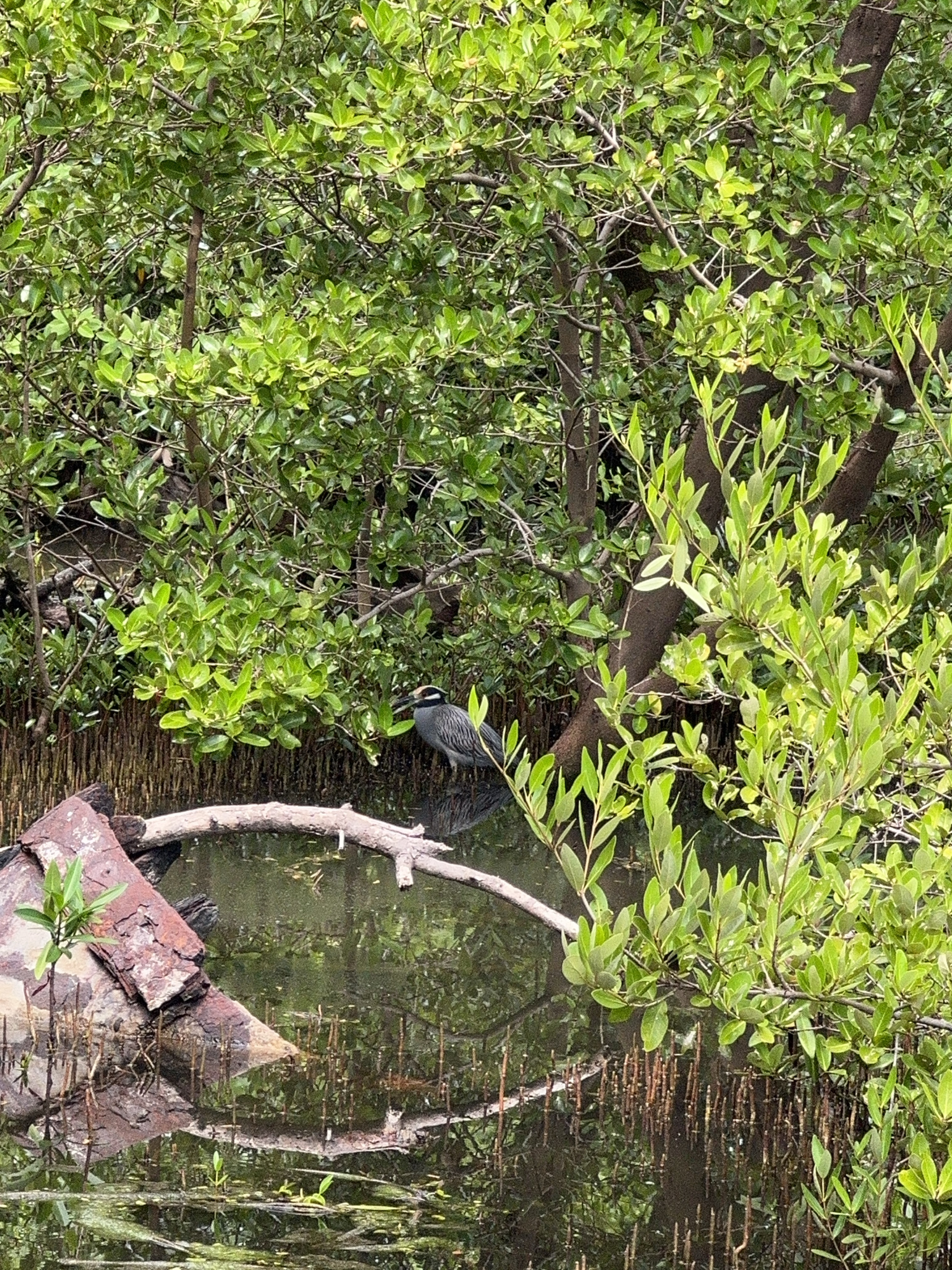
As an animal lover, I appreciated the rare bird sightings and spotting marine life throughout my self-guided tour, but my favorite part of this experience was learning about the importance of mangroves in supporting ecosystems, protecting coastal communities against extreme weather events, and serving as an effective nature-based solution to climate change.
Mangroves can help coastal communities by protecting coastal regions against waves, strong winds, flooding, and storm surges during strong storms and hurricanes. Acting as a buffer, they absorb the impact of the harshest elements of storms and hurricanes and reduce coastal communities’ vulnerability to damage, disruption of economic activity, among other threats to their wellbeing.
Some notable stats:
- The National Oceanic and Atmospheric Administration (NOAA) has tracked 400 weather and climate disasters since 1980 that cost the country $1 billion or more in damages/costs, with a grand total of over $2.7 trillion.
- There have been 11 hurricanes so far in 2024’s Atlantic hurricane season, with Helene and Milton leaving catastrophic damages in their wake, and likely costing the country over $50 billion in damage.
- The U.S. Chamber of Commerce Foundation released findings from an economic study that found “every $1 spent on climate resilience and preparedness saves communities $13 in damages, cleanup costs, and economic impact”
Not only do the mangrove trees’ complex root systems also prevent soil erosion during storms and keep the clay and sand from washing into the ocean, but mangroves store up to 5x more carbon in their soil and sediment than their tropical forest counterparts. An added bonus? They provide a safe haven for young organisms like sea turtles, crustaceans, mollusks, and more.

Mangroves are one of the top three carbon-capturing ecosystems on our planet, but like other ecosystems, they are at risk due to human-driven activity. With coastal development and unsustainable farming practices, mangrove disturbances destroy their ability to sequester carbon in their soil and sediment, releasing greenhouse gases into the atmosphere. With worsening impacts of climate change, the loss of mangroves would be detrimental for coastal communities, marine ecosystems, and have undefined negative consequences for the broader public health, according to the Mangrove Action Project.
How you can help protect and restore mangrove habitats:
- Volunteer or donate to these organizations e.g. Mangrove Action Project (global), The Nature Conservancy (US and global), Earthwatch Institute (global), Restore America’s Estuaries (US), Mangroves For the Future (US and international), Florida Oceanographic Society (Florida, US)
- Advocate and support legislation protecting mangroves by contacting your elected officials and supporting advocacy campaigns
- Learn more and spread awareness about mangroves
- Adopt some changes to your lifestyle that will benefit the environment e.g. choose certified sustainable products and seafood (Rainforest Alliance certified, Forest Stewardship Council, Roundtable on Sustainable Palm Oil, Marine Stewardship Council, Aquaculture Stewardship Council, Best Aquaculture Practices), avoid products linked to deforestation (palm oil, soy, beef), avoid overfished species
 A Healthy Blueprint
Leave a comment