

People from all walks of life will visit the Galápagos. You might meet someone who’s logged over 20 dives and whose main objective is to swim with the hammerhead and white-tipped sharks (tintoreras), or someone who’s chosen the Galápagos as a pit stop on their journey across South America.
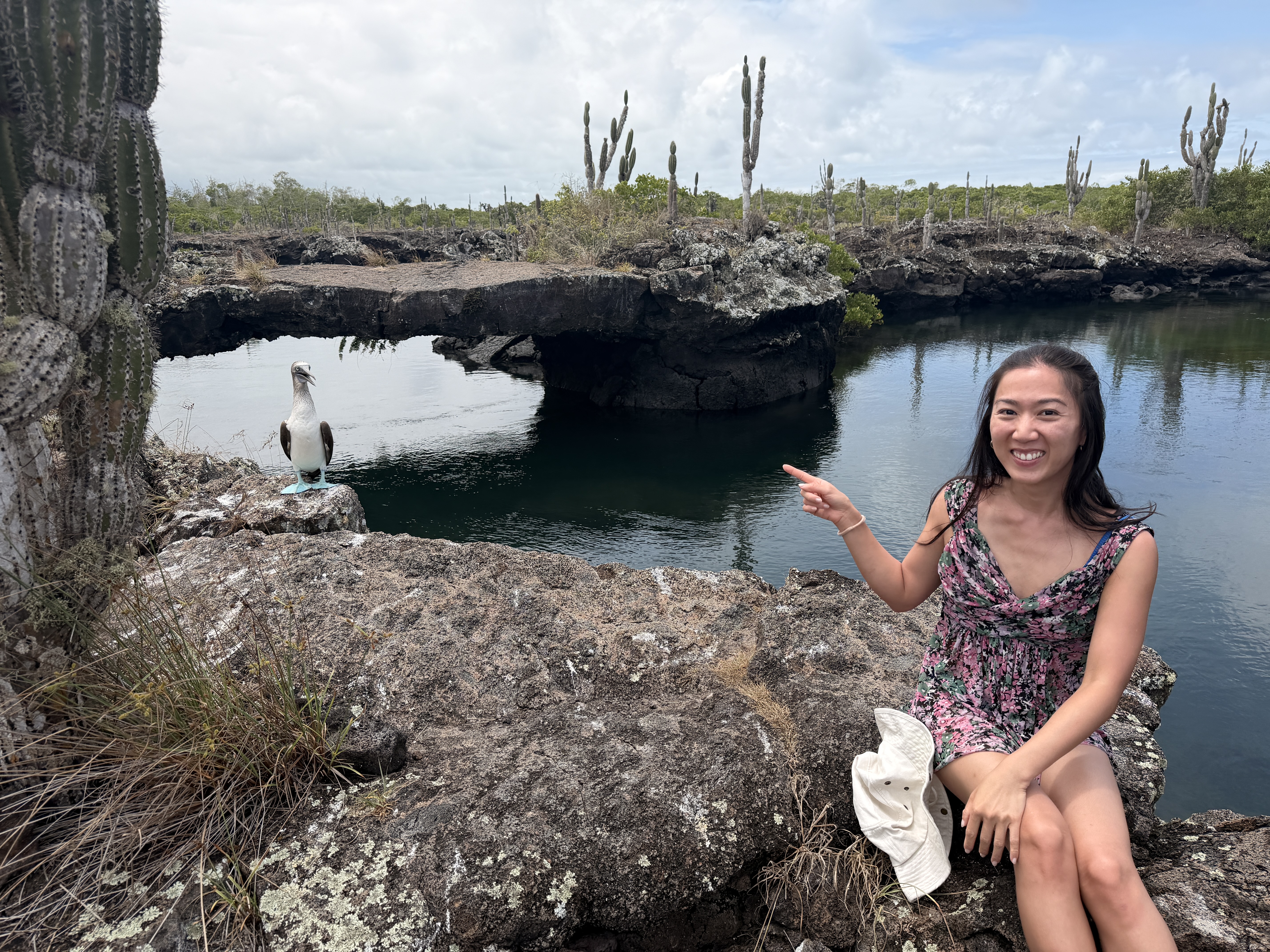
The Galápagos has been on my travel bucket list and I’m excited to finally check this off. As a seasoned solo traveler, I thought I’d been fully prepared for this trip, but there were some things outside my control that I couldn’t have anticipated. I’m sharing some practical tips I learned that might be useful for a future traveler interested in this slice of paraíso.
Plan for flight delays.
As of spring and summer 2026, there are no direct flights to the Galápagos, and you’ll typically need to fly into Quito or Guayaquil before transferring to another plane and flying into the Seymour Galapagos Airport (GPS) on Baltra Island or San Cristobal Galapagos Airport (SCY) on San Cristóbal Island.
In most circumstances when I must endure a layover, I’ll book the second flight with at least 2-3 hours of wiggle room, but this may be insufficient when there are flight delays outside your control for Ecuador travel. In fact, my flight out of JFK to Quito was delayed by an hour, and my flight leaving GPS to Guayaquil was delayed by two hours. While both GPS and SCY are small airports and relatively walkable, it’s helpful to expect delays on your first flight and just plan for the worst.
Note: I flew Avianca and this might be a normal practice, as a fellow solo traveler noted some airlines will opt to delay or cancel flights if they’re not full. I haven’t tested this myself, but if you’re on top of flight delay notifications and track other outbound flights from your same airline, there’s a chance you can hop on an earlier flight that has empty seats if you go to the airport earlier and speak with the airline.
Buy your transit card (TCT) online in advance.
As you prepare for your trip, you’ll find you need to pay for a transit card ($20 USD) and National Park fee ($200 USD for non-Ecuadorian residents) that you’ll pay before you enter the Galápagos Islands. Most travel blogs will say you can pay in-person when you arrive in Quito or Guayaquil, but speaking from experience with the plane delays, I recommend purchasing the TCT card online pre-arrival. In my experience, I was not permitted to board my plane in NYC because the airline staff thought I would have insufficient time to purchase it at the designated kiosk at the Quito airport.
Once you purchase it online, you’ll get to a confirmation page (and should receive a confirmation email) with a watermarked receipt. Travelers have mixed luck with bypassing the kiosk and heading straight to the security to reach the gates once in Ecuador (I was informed I still had to visit the kiosk to get the non-watermarked receipt before going to security).
Cash is king.
While there are some ATMs on the islands, it would be prudent to bring cash with you before to arrive. There are a few stores and restaurants who will accept credit cards, but the fees are pretty high (I must have seen one that was more than 10%). Small bills are encouraged and when you use large bills you’ll likely get Ecuador currency in exchange.
This might be a good reference point for costs (all in USD) on the islands (as of early September 2026):
- Lobito bus from GPS Airport to Baltra Island water ferry: $5, and there’s a booth right outside the airport where you buy a ticket
- Baltra Island water ferry to outskirts of Santa Cruz Island (the main island and most inhabited): $1
- Taxi from Santa Cruz outskirts to Puerto Ayora (main town): $25 (most will say $30 but you can negotiate down, and if you ride with someone else you might be able to pay $20)
- Alternative: Bus from Santa Cruz outskirts to bus terminal in Puerto Ayora: $5
- Taxis (white pickup trucks) around town: $2 during daytime, $5 during odd hours (e.g. if you wanted a ride to catch a 6am ferry, for instance)
- Water ferries from a pier to a larger ferry (when traveling between islands): $1
- Ferry rides between Santa Cruz, Isabela, San Cristobal: officially $60, but if you buy on the island and with agency tour packages, it may be cheaper; these ferry rides are ROUGH and you should take motion sickness medicines since they’re about 2.5h long
- Alternative: you can take a <1h flight between islands ($? since I did not take advantage of this option)
- Fresh juice: $4
- Lunch or meals of the day: $6 (typically comes with a fresh juice, appetizer soup, and a simple main entree)
- Whole fried fish: $20-30, and comes with patacones, salad, and sometimes rice
- Whole lobster: $25-40, but comes with patacones and salad
- Snorkel mask rental: $5 for the day (+$2-5 for fins, maybe more for the suit)
Pack extra sunscreen.
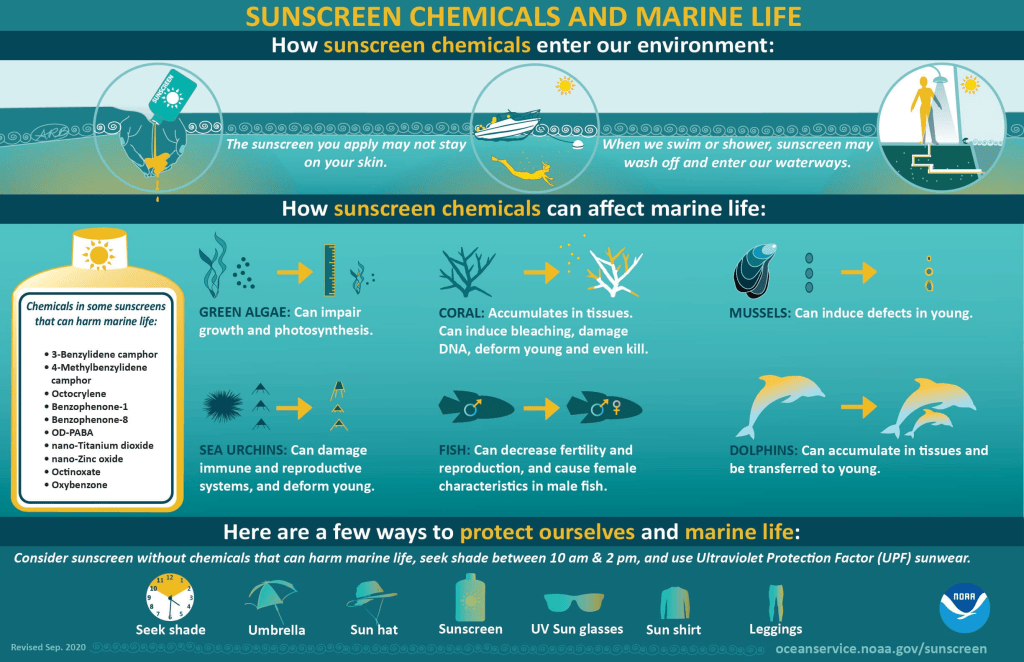
The Galápagos Islands sits at the equator so you can expect strong rays from the sun, regardless if there’s overcast. It would be prudent to pack a hat, light umbrella, and plenty of extra sunscreen (it’s very expensive on the island, upwards of $20+ for a travel-size tube). If you’re using a carry-on, a simple hack is filling multiple travel-size tubes with sunscreen.
As a general best practice, I recommend you purchase reef-safe, mineral sunscreen that doesn’t cause harm to marine life and coral reefs. You should look for non-nano zinc oxide or non-nano titanium dioxide as the main ingredient.
Note: if you are prone to mosquito bites, it might be useful to also pack some insect repellent for your trip. Some people can attest to the efficacy of certain essential oils as an effective deterrent, but I’ve personally only had luck with DEET insect repellent when I travel (I hadn’t brought any for this trip and my legs are now bear the battle wounds…The mosquitoes were incredibly active during dusk!)
Prepare to unplug from the world.
In most cases, if you don’t have an international phone plan, it might help to purchase an eSIM card when you travel to another country. When you go to the Galápagos, I’d say this is useful about 65-70% of the time, as you will get service on the main islands in town but will be out of luck when on the water or visiting the smaller, uninhabited islands. Additionally, the WiFi is only semi-reliable, as it’s incredibly slow and not great for downloading apps or streaming.
To prepare, I recommend downloading anything you might need while you have reliable service, including offline maps of the places you plan to visit, mobile apps (e.g. for translation, currency exchange rates where applicable, eSIM, chat apps if you can’t use your mobile number abroad), etc.
There are many eSIM companies that offer eSIMs (that you can purchase and download in advance to your phone) at the country, region, or global level and at different rates depending on length of stay and GB size. I’d historically used the company Airalo, but someone showed me MobiMatter, which does a price comparison of all eSIM companies so you can get the best price.
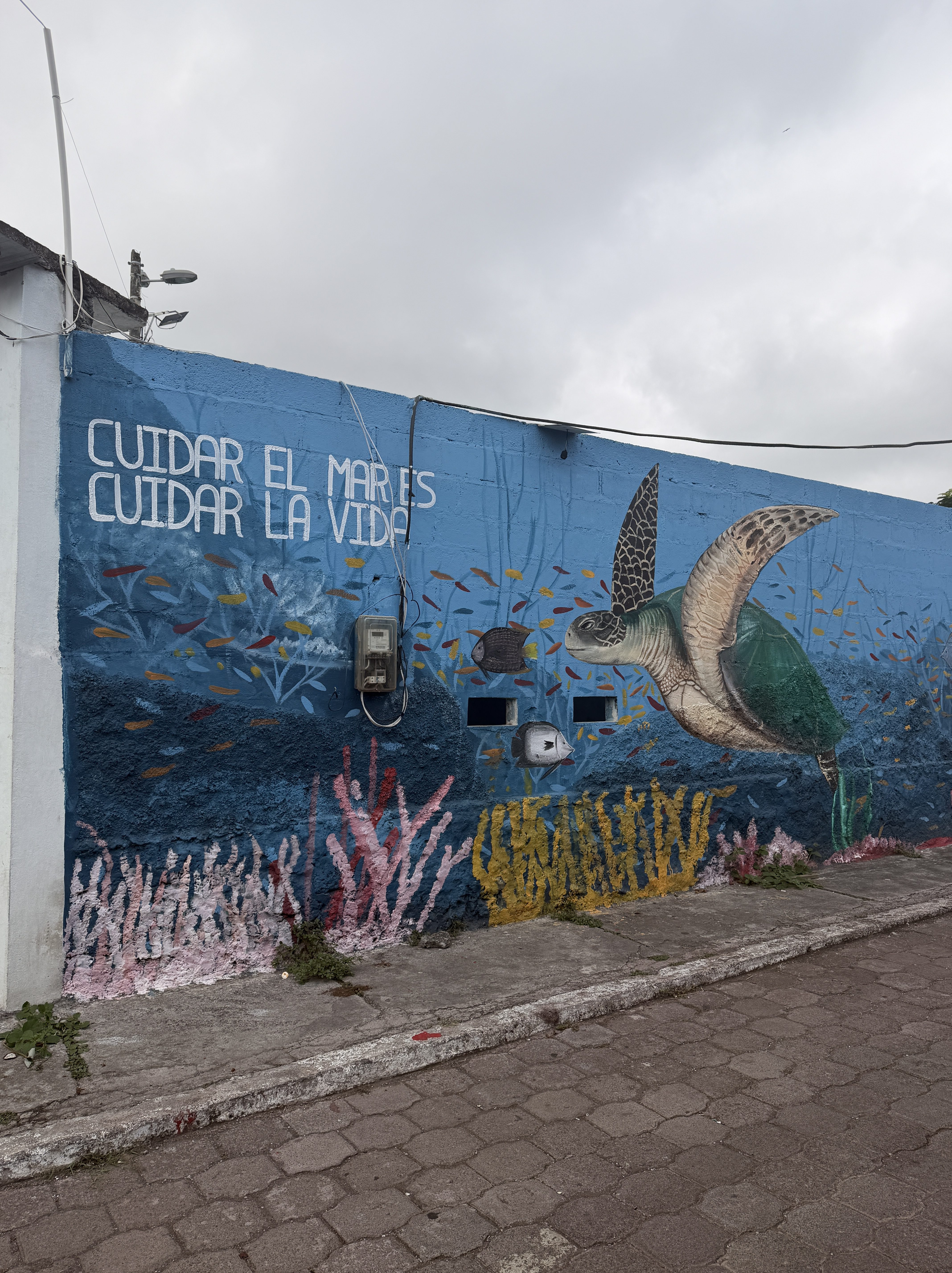
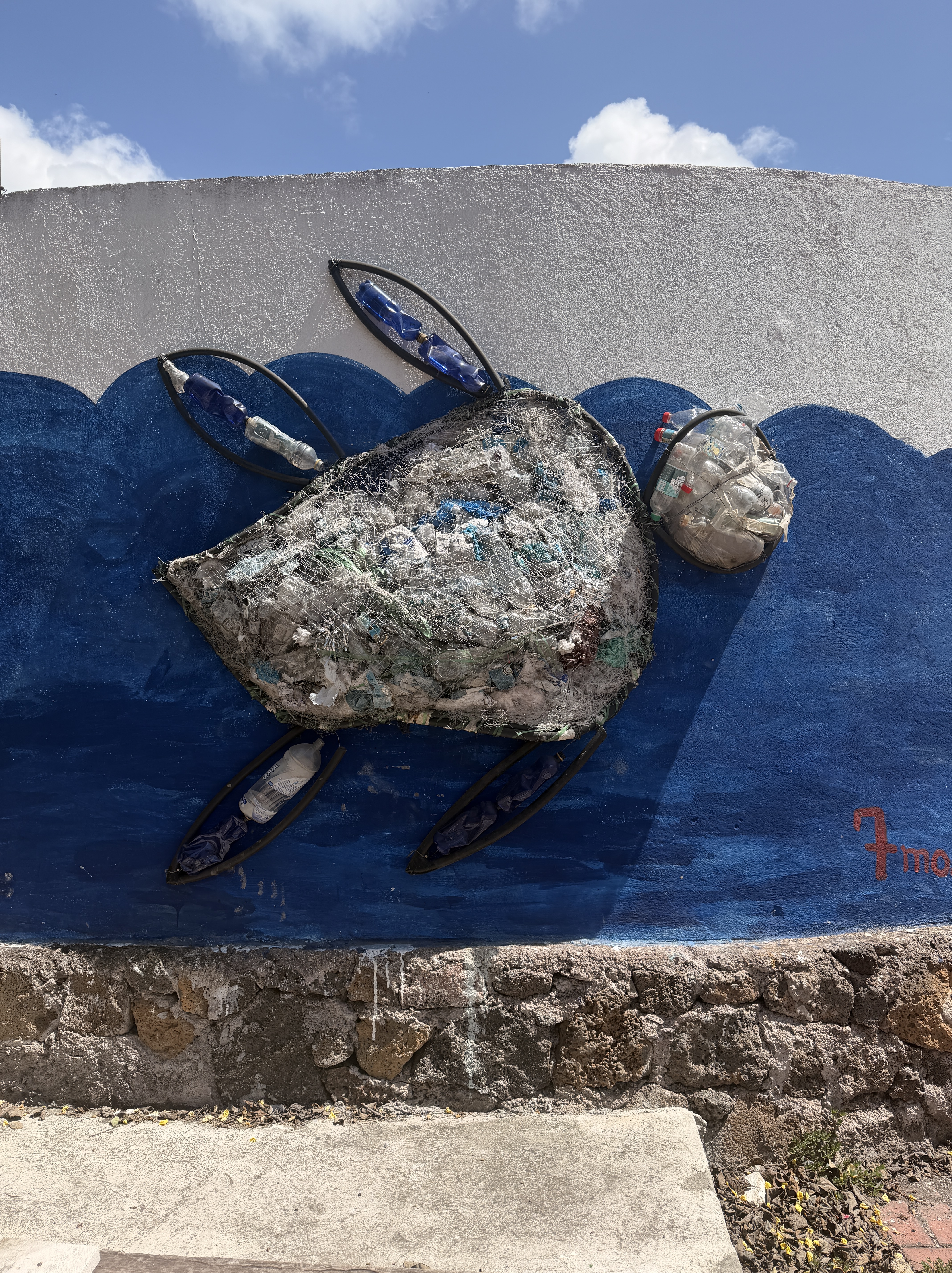
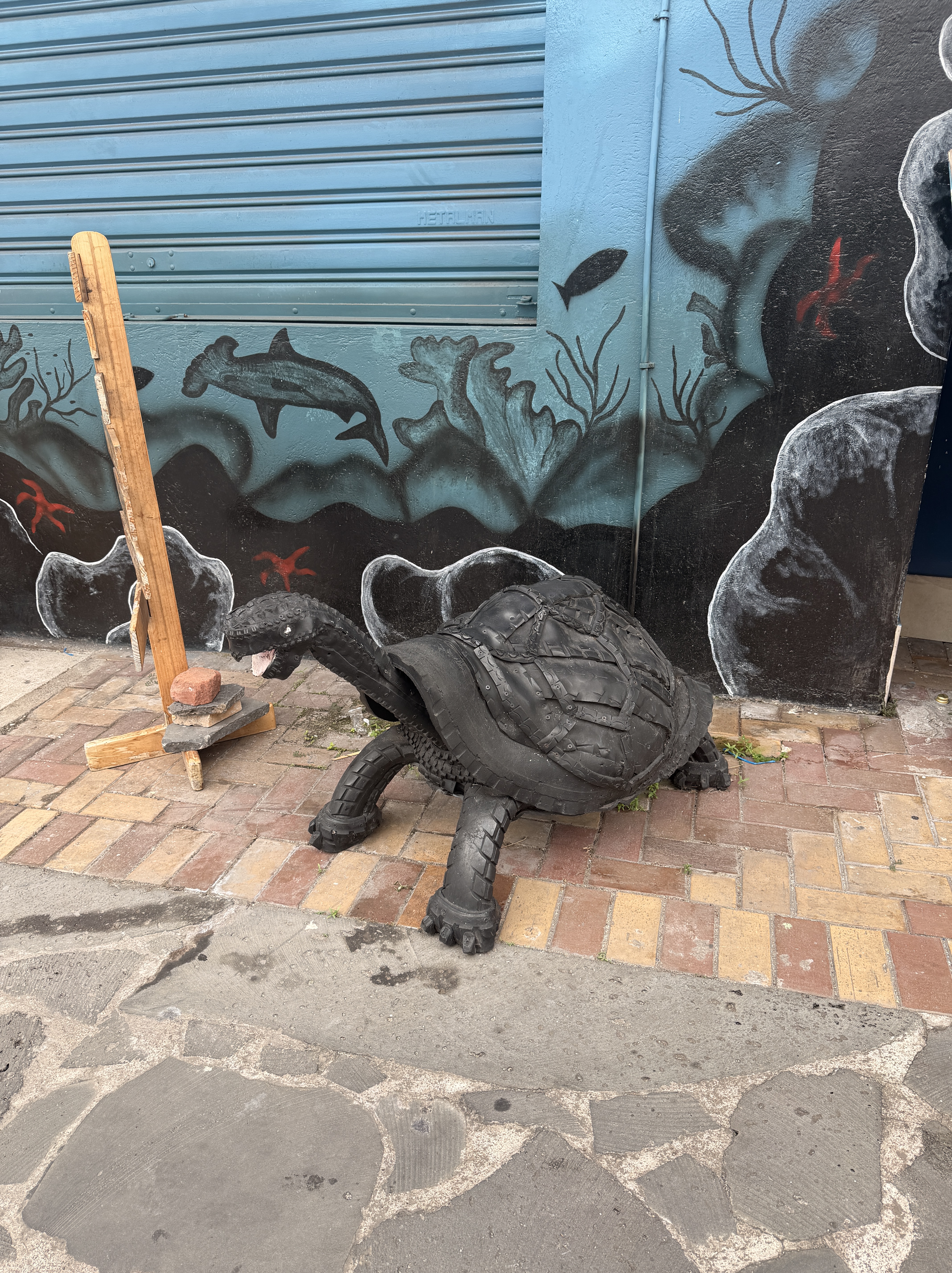
This was truly a memorable experience that underlines the fragility of our terrestrial and marine ecosystems and the impact we can make if we took a little bit of care. I hope you found these tips useful and that you will be better prepared for responsible travel to the islands in the future!


Leave a Reply